Monday, March 30, 2015

Chilateada in Izalco - Easter Monday

Is Easter Monday a thing? I don't think it is but I'm making it into a thing. It's certainly treated as one here in Izalco, El Salvador where the Monday of the Easter week is the last day during the whole Easter festivities extravaganza when chilate is made and served to the hungry pilgrims traveling long distances to pay their respects to Christ. If you don't know what chilate is see previous posts. Today, a pick-up load of SS city dwellers, aka myself and some others including my abuela, made the journey to Izalco to observe our pious duties. And there we were, inside this little white and purple church listening to a wailing rendition of Ave María being blasted from some old speakers, stomachs rumbling, mouths watering and eyes burning from the combination of pine incense for the deities and wood fires used to prepare the chilate for us mortals. I think we got the better end of the deal.

It is customary to pay your respects to Christ i.e. make a donation to the church, before approaching the food area. Once this is done and you have received proof of payment in the form of a sticky coconut palm flower, you can casually make your way over to the kitchen area and observe, maybe even participate in, the cooking process. I had never seen this being done so I was intrigued to see the whole process of grinding, pounding, soaking, straining, flavoring and finally cooking. It was impressive to see the sheer quantity of maize flour that was being moved from one station to the next. Once the maize has been ground and pounded, it is soaked in water to produce a milk-like liquid. This is then strained using cheese cloth or muslin and the liquid is cooked in large pots over an open fire. When the liquid is finally of cooked and thick enough, you can exchange your stick coconut palm flower for a portion of delicious goodness. Chilate is served hot in little bowls with a serving of local sweets. You can get an idea of what the preparation process looks like below:

Straining the 'corn milk'

Heating and stirring. These are not a tiny women.
Unfortunately for us the chilate was not ready when we arrived and even after walking around Izalco, we were not patient enough to wait another hour. Attempts at chasing the Easter processions were unsuccessful and a Salvadoran democratic decision was made (interpret this as you like). We made our way to Sonsonate wanderlusting after food and more adventure. It's always nice to visit the little towns and view the sites. It is sometimes very easy to forget the beauty of the changing landscapes, lava fields, sprouting sugar cane, volcanoes and colonial churches given the current social situation, and it is nice to be reminded.

Main Izalco church and the Volcan de Izalco in the background.


Sunday, January 4, 2015

Good-bye Manila

According to my sister, the secret to a healthy, illness free life is only a bowl full of fruit and a dram of whiskey-a-day away. I don't know how accurate this theory is, but it certainly does not hurt to try this 21 year, age old adage out. It certainly helps numb the pain in a vitamin rich way.

I hate to say it, but I think this has actually been the worst Christmas and New Years I have ever had, and I do not look forward to any future holidays which hope to challenge this year's end of year events. Unpleasant and aggressive illnesses both at the start and the end of the holiday paired with the heartbreaking death of two beloved members of our family at the hands of incompetent doctors and substandard medicine, it is unfortunate that this has all happened within days of the end of the Manila experience.

Ironically, the city has been at its most pleasant during this visit, or maybe it was just the lesser of many evils. Here's a shot of whiskey to the final chapter of life as an expat.


Wednesday, September 17, 2014

Piñatas in Santo Domingo de Guzmán - El día de la mujer indígena

Traditional Salvadoran dress - La volcaneña
Santo Domingo de Guzmán is a small village in the department of Sonsonate in western El Salvador. Contrary to popular belief, El Salvador is the home of three separate indigenous groups, descended from the Aztec families of Northern Mexico. These are the Lenca, Cacaopera or Kakahuiles, and the Nahuat-Pipiles. While the language of the Lenca and the Cacaopera is believed to be completely extinct, Nahuat can still be heard in some locales, and might even be undergoing successful revitalization, though it is really too early to tell. One such place where Nahuat can be heard is in Santo Domingo de Guzmán, a small village in the department of Sonsonate in western El Salvador. 

"Dale dale!" - Hit it!
This past weekend, I along with my cousin and some friends from the Tzuntecun Ejecat collective went to Santo Domingo de Guzmán to celebrate indigenous women's day (el día de la mujer indígena) with the people of Santo Domingo. It may not look like much, but this celebration marks a very important event in the history of Santo Domingo, as it is the first time the indigenous women of the village have ever been celebrated in this manner. With the help of a marimba duo from Izalco, some young volcaneñas, generous helpings of horchata sponsored by the mayor of Santo Domingo, a theatrical piece by the Tzuntecun Ejecat Collective, and a good old fashioned piñata 'to help us remember the children we once were', the indigenous women (and men) celebrated their unique cultural heritage as Nahuat speakers. Coincidentally, it was also El Salvador's national independence day weekend, so it was pretty great to see everyone celebrating their individual and collective identities on such a day.

Here's to many more of these celebrations:


Giving the piñata a good whack


The wonderful people of Santo Domingo de Guzmán and Colectivo Tzuntecun Ejecat

Sunday, August 31, 2014

Manila

If roads and highways are the veins of city, Manila's main arteries are clogged like those of a man who sits on his squishy throne all day snacking on crackers topped with butter, pate, camembert and roquefort, plus a Glaswegian scooby snack* on the side. For dinner he asks for a 16oz steak, french fries and a liter of diet coke. Outside his golden palace of delicious goodies lies a wasteland of high rise buildings, next to haphazardly built slums with open sewage systems and giant knots of electric wires. There is a constant hum of traffic, punctuated by shouts and blaring horns as individual cells make their way about their busy lives, selfishly pushing, inching forward one creaking minute at time. 


Meet Manila, one of the most densely populated (and one of the most badly planned) cities of Asia. You might think I don't like this giant capital, and you're right, I don't. I find it difficult to summon any kind of enthusiasm for a city which completely disregards much (if not all) of its potential for long term, socially relevant growth, choosing instead to focus on personal and economic gain. Don't get me wrong, the city is physically growing and it does invest in new globally fluid projects like shopping malls with huge international retailers and ultra modern apartment buildings with exquisitely designed interiors. These are blind projects though – less than 5% of the population can actually afford such luxuries.

Anyway, who wants another mall with the same shops and restaurants when schools haven’t been renovated since the 70s and hospitals are largely inaccessible in the heart of the city? Instead of investing in health and education, the city invests in glossy advertising to improve its image, like make-up can be used to create the illusion of high cheekbones and delightfully youthful skin. While Manila is far from being the only city in the world which uses such tactics to mask its skewed priorities, it is probably one of the most transparent. And when you’re stuck in hours of traffic with nothing better to do than to look at the people and buildings around you, decades’ worth of easily fixable mistakes glaring at you, you can’t help but become frustrated and disillusioned with the world around you.

If trees are the lungs of the city, this man has none, opting instead to fill the blackened cavern in his chest with exhaust fumes and airborne by-products of industrial waste. He takes delight in the pockets of combustion smoke which settle in each tunnel, each underpass, as stalled cars, motorcycles, trucks and buses wait like prisoners in line for their execution. Why should they care if their actions negatively affect others? Their own lives are too short.


* A Scooby Snack is a type of hamburger sold in Glasgow. It holds a hamburger patty, square sausage, bacon, potato scone, a fried egg and a slice of processed cheese, served with a hamburger bun, tomato ketchup and brown sauce. Two bites from one of these babies and you're set for the week. Seriously. If you're in Glasgow and interested in trying one out, keep an eye out for The Maggie, a white food van which usually hangs out at the the entrance of the Glasgow Botanics at the top of Byres Road in the West End. 

Friday, August 29, 2014

Idanha-a-Nova: Boom Boom

"Ah, you're looking for boom boom", fistpump.
"Er, yes, the festival".
"Sim, o bum bum" fistpump, fistpump, "you have to go back where you came from, back to Idanha-a-Nova where you follow the river, mumble mumble, Barrancos mumble take a left mumble. But whatever you do, do not cross the river. Then you follow that road, mumble mumble mumble mumble and there, you ask for directions again. Ok?"
"O-ok" I have no idea, "muito obrigada e boa noite".

I turn the little Fiat 500 around and leave the thin smiling older lady standing by the road near the border of Spain and Portugal. We are once again driving back towards Idanha-a-Nova, towards a setting sun, towards the policeman who told us to come in this direction in the first place.

"Do you know where you're going?"
"No, but we'll figure it out".
"Well, if we pass that camper van again we can ask them for directions. They looked like Boomers."
"These guys also look like Boomers, and they look just as lost as we are". We pass a car parked on a side lane leading to the middle of a wheat field, interior lights on, a big map held up comically covering the faces of two blonde hunched figures. They could also have been spies.

After about an hour of driving up and down the same 20km stretch of road between Idanha-A-Nova and the Spanish border, asking for directions two more times, once to that same policeman who sent us the wrong way and another to the French group in the camper van who took the time to explain that all policemen are idiots in broken English, we finally found the way to the entrance of Boom Festival. We also found the 2 hour long queue of cars waiting to be let onto the grounds. In fairness, it was another 20 km to the actual entrance from the point where we finally joined the queue. 20 km at a snail's pace. 3 hours later, just after midnight, we were in.

The week that followed was one of the best festival experiences I have ever had. Disregarding the music which is where the festival gets its name from (psy trance = boom boom), this was a gathering of 30,000 like minded, socially, environmentally, and politically conscious individuals who were out to have dance, have fun and share the love. It's hard to talk about the festival without sounding cheesy, but what struck me most was the open-mindedness and genuine kindness of complete strangers towards one another. As an example, even after 7 days of full on party mode, there was very little litter to be seen on the festival grounds. Communal areas such as vegetable and herb gardens, shared kitchens, cafes and tree nests were kept clean by the festival goers themselves. Bending over the mud ovens puzzling over where to get more kindling from, someone suddenly appears beside you with an arms' full of firewood. Suddenly instead of cooking a meal for a small group of friends, you become part of a shared feast exchanging ideas and tips, sharing the workload. If only large cities had more communal spaces like that, as well as the conscious mind to be more respectful towards each other.

Mind you, I am not entirely sure whether such a social system would work for more than a week. The novelty might wear off after a while and you could find yourself searching for a way to escape the crowds and the noise. You could end up in a wheat field surrounded by golden morning light, glad to have found some solitude at last, but wary of the harsh glaring sun which will quickly make its way of the bright blue sky.

For the most part though, the festival was truly educational and eye opening experience. I learned about water treatment systems which use different kinds of grasses and mosses to purify water, without the need of using chemicals. I also learned about midwifery and the fact that it is actually illegal to practice this in some countries. Who knew having a child at home could be so threatening for the medical profession. I learned different theories about the psychology of relationships, models for efficient and self-sustaining communities as well as the role of the individual on the political system. I even met Benny Wenda, the Laani tribe leader from West Papua who talked about the genocide of his people and civil war that is going on there right now. Turns out he's been exiled from his country and now lives in Oxford. There is a recording of him speaking Laani on Language Landscape.

View from a shepherd's house at Idanha-A-Nova

The trip ends with Inti and I camping near an abandoned house on the hillside of Idanha-da-Nova. Nothing obstructs our view, the distant sounds of Boom echo in the valley and mountains, our bellies are full of watermelon and homemade tomato jam given to us by kind, jabbering old ladies dressed in black, ready for Sunday evening mass. Tomorrow we wake up at the crack of dawn and make for Lisbon. We are ready for our next trip: Manila.

www.boomfestival.org
www.freewestpapua.org

Monday, August 25, 2014

Cycling through Riesling country

Drying lavender, ED 2014
Before coming to the Philippines, I spent some time in Germany cleaning, fixing  and weather proofing windows and furniture as well as gardening, harvesting and drying something like 300 lavender plants. It's surprisingly nice to sit on a hill of lavender surrounded by bumble and honey bees gently ignoring you as they go about the very important task of gathering nectar for their hives. Honey bees are pretty harmless, and won't commit suicide by stinging you as long as you don't approach them in an aggressive manner. One of these days I hope to convince my parents to add a beehive to their garden, but that's a ways away yet.

I'm afraid the German country side isn't in the top 20 summer destination of 2014, nor does it have the romantic appeal of French or Italian countryside but that's quite alright with me. The days are warm, the sun comes out during the day, and we have the most magnificent summer thunderstorms in the evenings. Thick forests and cool freshwater lagoons offer relief from the heat and you can feed yourself off countless fruit trees and berry bushes. If you're really interested, you can follow the fruit trails all the way into Riesling country, either by cycling or navigating along the Mosel river from Koblenz to Trier (app. 200km) and beyond.

Unlike the Rhein which is a busy highway of cargo and heavy transport ships, the Mosel river is winding country road which offers views of countless rows of wine vineyards. The best time to cycle along the river is in the morning before 11 or after 3 as dusk begins to settle. At these times the heat is not as severe and you will save yourself having to collapse in the mid-day sun  under a withered dry tree offering sparse shade. If this does happen however, rest assured no one will bother you, although at least try to make sure you are on the river bank so you can enjoy a quick dip when you wake up.

People in this part of Germany are very friendly and for the most part helpful - maybe they're used to seeing lots of lost cyclists wandering the streets of their towns. The towns themselves like Zell for example, are beautiful and small, paved with cobble stones and full of old establishments each offering samples of the best wine in the valley. If you find yourself in Zell, watch out for the legendary black cat (Zeller schwarze Katz) which protects the wine of the area from thieving merchants.

The food on offer along the river, is simple and filling German cuisine. If you are staying in a hotel that does breakfast in the morning, think muesli, fruit, yogurt, wild honey, perfectly prepared soft-boiled eggs, German rye bread, nutella and selection of cold cuts (cheeses, hams, cucumber and tomato). To be honest, this was the best breakfast I have ever had at a hotel. I have never been so excited over a selection of four different kinds of German bread, three different kinds of honey, and perfect soft-boiled eggs buried in sand. Moving on to lunch, if you can stomach it after your filling and nutritious breakfast, summer is the season for delicious pfifferlinge (otherwise mushrooms or chanterelles) which are lightly cooked with butter and a pinch of salt and pepper, served over toast or pasta. Alternatively you can enjoy some flammkuchen, or tarte flambee, a thin-crusted Alsatian pizza of sorts topped with creme fraiche, thinly sliced onions and bacon. Fortunately, some taverns now also offer vegetarian alternatives which saves some the tedious hassle of picking off the tiny bits of bacon. Finally if you're starving for grub at dinner time after your 60km cycle sans lunch, a generous portion of potato, sausage and onion casserole awaits you next to a pint of wheat or white beer. Alternatively, a leafy goat's cheese salad with a glass of Riesling will also do. After this you're off to bed for a good night's rest before an early start the next day.


Cycling selfie, CD 2014

Tuesday, August 19, 2014

Mud skippers, sea slugs and Synapta Maculata

Sea diving in the Philippines is a marine biologists' wet dream with countless underwater species to be seen, even by the most amateur enthusiasts such as myself who have no idea what they're looking at. As a pretend marine biologist, one who has explored a fair number of coral reefs around the world in the Americas, Europe, Asia and Oceania (Great Barrier Reef not included), I can certify that this is one of the most diverse and biologically rich oceans to explore. Although I have also heard great things about Indonesian and Papuan waters. Moray eels, clown fish in anemones, long nosed snapper, sea turtles, different coloured parrot fish, moorish fish, lobsters, angelfish, long nosed butterfly fish, starfish, and pufferfish are some of the great underwater creatures you will see while diving in the Philippines. Here are some of the creatures I was most excited/intrigued to see:

If you're wondering what the hell is a Synapta Maculata, that is exactly what I thought when I first saw one. Clues:
  • It lives underwater;
  • It is long and snake like;
  • Appears to be wearing a skin too big for its size which bunches up depending on the creatures' shape or position;
  • It has stubby whitish tentacles on one end with little feelers that wave back and forth, presumably for feeding;
  • The other side looks like the end of tail;
  • It has black and white stripes.
After hunting around on the internet for a while with searches like "striped underwater snake with tentacles", I finally found an answer. It's basically something like a spotted worm sea cucumber which can grow up to 2 meters in length. Pretty harmless creatures, but I wouldn't want to accidentally swim into a group of those.

Sea slugs are the cutest things. I've never before had the chance to see them in the wild, but swimming 20m below sea level, you'll suddenly see tiny bits of purple and white stripes wiggling around you. Take a closer look and it's an itty bitty sea slug swimming enthusiastically, it's yellow horns ready to pounce on a delicious bit of sponge. Tasty. There are many kinds of sea slugs and they come in all beautiful shapes and sizes, but here in the Philippines the most common are chromodoris lochi. The ones I saw were about 2cm long, but they can grow to double that size.

When I was little, I used to love watching nature documentaries and I remember learning about these weird fish that lived on land. Somehow the name of these creatures stuck with me, and as soon as I saw them I knew I was looking at mud skippers or periophthalmus cantonensis. They are amphibious fish which spend most of their lives above water by breathing through water stored in their cheeks. They belong to the same family as gobies, those little fish with beautiful multicoloured tails which breed like crazy in aquariums. Of course, the goby family is huge and there are many different kinds. You can learn more about mud skippers here (courtesy of David Attenborough's BBC Life series) :


Monday, April 21, 2014

Emadatse recipe - Bhutanese national dish

I recently went on a trip that took me through the Omani desert decked out in a complete winter outfit - fluffy pink winter jacket and everything. Sounds mad fun right? Between the flip-flop wearing, pungently aromatic tourists and the oudh scented and elegantly dressed Omanis in full length dishdashas and abayas, I stuck out like pink shrimp in a dry desert. For those of you thinking I must have terrible foresight for not having chosen to wear more suitable clothing upon leaving the mild British winter in the middle of February, well, I was on my way to see the recently snow covered peaks of the Himalayas. I needed my pink fluffy jacket. It is also because of this pink fluffy jacket that I made friends on that leg of the journey. I now have a number to call if I ever need to organize fireworks for a wedding or a place to stay in Jordan.

The journey itself was long but uneventful. After flying the London-Muscat-Bangkok-Paro-Bangkok-Muscat-London route however, I am beginning to realize that I like the whole process of travelling less and less despite enjoying the exploration of various countries, cultures, languages and foods more and more. I sense that if teleportation is not invented soon I might have to resort to some other means of travel. Kayak for example. Now that sounds like an adventure.

Anyway, despite the horrors of flying and being groped at security checks, I did arrive in Bhutan in one piece and made it safely back to London to tell the story. I will be updating those interested about my adventures in Bhutan, but at a later time. For now, I will ease you into the Bhutanese frame of mind by leaving you with a deliciously spicy recipe for emadatse, the Bhutanese national dish of cheese and chilies. Enjoy!

Ingredients:

  • 1 thinly sliced onion
  • 3 Tbsp oil
  • 5 cloves crushed garlic
  • 500g soft fresh cheese*
  • 1-2 tomatoes - thinly sliced
  • 500g green or jalapeno chilies
  • 1 cup water
  • 2 Tbsp butter


Optional spices:

  • 1/4 Tsp turmeric
  • 1 Tsp sichuan pepper
  • 1 pinch cinnamon
  • 1 inch of fresh grated ginger
  • Salt

Method:
- Prepare chilies by slicing length wise into quarters and de-seeding if deemed necessary. (Beware of chili juices on fingers when touching other sensitive areas e.g. nose and eyes). (I did remove the seeds this time and the resulting dish is pleasantly spicy and full of flavour. Judging by the look of fear and horror on my flatmates' faces when presented with a bowl full,  this might not be everyone's opinion, so proceed as you best see fit). Set chilies aside and slice other veg. 
- On a low heat, fry thinly sliced onions in oil with optional seasoning until soft and fragrant. Add crushed garlic and thinly sliced tomatoes. 
- After one minute, add sliced chilies and stir fry until bright green (1-2 min). Add 1 cup of water and allow to boil.
- Add 2 tbsp of butter, salt and soft cheese, stir well, cover and simmer until chilies are thoroughly cooked and tender.
- Serve!

This dish is traditionally served with red rice and yak meat, but it can also be combined with eggs and rice for breakfast, on buttered toast as a snack, with spinach and pasta for lunch or boiled potatoes for dinner. The options are endless...


* Ideally, you would use a type of fresh yak's cheese for this dish. Since yak cheese is not readily available anywhere outside of the Himalayas however, I went for a combination of ricotta and turkish peynir. It's up to you what kind of cheese you go for, but you're looking for something with a mild flavour that melts nicely and makes a smooth paste which does not harden when cooled. Cream cheese with bits of feta also works.


Wednesday, December 25, 2013

Christmas in Manila

Uy, I'm exhausted. I have done little here in Manila but live in my little privileged bubble and listen to people talk about the various scandals and "accidents" taking place in the Philippines. Like the bus that crashed through the barriers on the Skyway (one of Manila's major roads) on the 16th of December, flipping over on its back as it crashed on the road below. I believe most of the passengers died, the bus driver was decapitated. Or the shooting in Ninoy Aquino Airport (the one in Manila) which killed Mayor Talumpa and his family. It is debated whether the shooting took place inside or outside the terminal. There are varying degrees of disagreement on this point, but still, there's definitely an issue of airport security being brought into question.

Then there's the rampant corruption (but it's all very hush hush) particularly around the foreign relief money and goods being sent over to the victims of the typhoon in Tacloban. Sure there is some awareness that corruption is a definite threat and barrier - you can read more about it in the Philippine Star - but really, it's not just about making sure the money and relief goods get to those most affected, but also about making sure those in power locally do everything they can to facilitate this. Unfortunately, from what I understand, most residents of Tacloban are in direct opposition (and always have been) to the political party of the current president, and those in power aren't too willing to lend a helping hand because of this. Sure, there are many campaigns being publicized all over Manila, on the radio and TV, urging people make donations for those in Tacloban, but there is very little logistical support being offered.What is the point of sending lots of aid (man power and material) if the local government isn't prepared to put it to good use?

Imagine you are a volunteer heading off to provide some much needed help. You arrive at Tacloban airport ready to get to work delivering food, water and blankets to those who need it most, ready to build appropriate sustainable housing, only to find that nothing has cleared customs. After about a month, the materials finally clear customs, and you realize no logistical support is offered for storage, transportation, security, sanitation etc because the papers haven't been signed. What papers? This is the first you hear about this. You ask the organization  you are working with to help, but there is only so much they can do. Beaurocracy is beaurocracy and it is not within your policy to offer bribes. So you sit on your ass and do nothing but wait. You wait as more relief piles in, more materials and money appear, and somehow as you wait, the large pile of goods becomes starts getting smaller. By the time someone somehow manages to get the goods released, and some sort of support and transportation, you go to pick up the stash, and realize it has been reduced to a third of its original size.

This is an imaginary situation. I am not a frustrated volunteer in Tacloban, but the truth is this is probably what is happening there right now.

It's definitely more fun in the Philippines.
Merry Christmas.

Friday, December 20, 2013

Puerto Galera, Calapan and Mike's Beach - Mindoro Oriental

For lack of a better name, I'm calling the place where I've been staying for the past week, "Mike's Beach" because it was actually Mike's beach. And a lovely one at that.

Mike's Beach, Mindoro Oriental, PH


Today was a travel day, a non-day at best where you wake up at some ridiculous hour in the morning feeling drowsy and ever so slightly naseous from lack of sleep, forcing yourself through the motions of bathroom, dressing, packing and eating because you know that if you don't you'll regret it later. Nothing screams "I told  you so" louder than a stinking, garishly pink bathroom with piss speckled toilet seats and no running water on 50 tonne rust bucket of a ferry in the middle of a turbulent ocean. But hey, at least they had a toilet.

Before this charming view of the ladies room however, the journey wasn't so bad. Once you get over the initial drowsiness and lack of willingness to do anything, early morning starts are pretty great. The air is fresh and cool, a great plus in the jungle tropics, birds twitter and sqwak animatedly, crickets chirp softly, tuko geckos call out in their characteristic manner "t̟ɔʔ' ku...t̟ɔʔ' ku". Sunlight begins to peek over the horizon, and the streets are empty save a few stray dogs with a death wish scattered on the winding roads. Surprisingly, the roads on Mindoro Oriental island are in excellent condition - smooth concrete, no pot-holes, wide enough for two lanes - their only fault being the fact they don't always join up. So one road will go all the way round the island one way, but then suddenly stop and end in the middle of the jungle. If you want to reach your desired destination, it is then necessary to take a detour all the way around the other side of the jungle island. This isn't a problem though as long as you know what's coming.

Continuing on the fresh aired tour of the jungle, you'll pass a large roaring waterfall which drowns out all other natural sounds. Occasionally, a wasp like motorcycle will roar past you throwing up exhaust fumes in your face, and you will curse at them until the pollutant particles subside. Once out of the jungle, nearer to the port, level rice fields replace the creeping jungle, turning the ground around you into the multi-coloured sky of a sunrise. Clouds break and sunlight slowly illuminates the world around you, water buffalos snuffling their way lazily through the mud.

Calapan port itself is like any other little village, in fact very similar to those of Central America. Lots of beaurocracy, tiny pieces of coloured paper and ferry fares later, and you're on a boat, oblivious of the fact that this giant vessel is a potential deathtrap for so many reasons. Second hand, recycled gift boats from China, Japan etc. dating from t he 70s should really be updated in my opinion. Then again, you don't always take a proper look at the giant machine until after you've arrived on the other side, en route to the  wonderous traffic and pollution of Manila.

So why was I in Mindoro Oriental, traversing the jungle at an early hour? Hidden away in little bays full of mangroves around the island are little private beaches and houses. Puerto Galeras itself, on the north of the island, is very popular with foreigners and retired expats who will build themselves nice private houses for their own benefit as well as that of others (for a small fee of couse). The diving in this area is also great, as are other watersports in general. If you know where you're going, you could do a lot worse than retreating to another island in the Philippine archipelago for a break from Manila.

In case you were wondering, no, I did not see any lions, tigers or bears in the jungle. I did however see a four giant sea turtles, one which was munching contedly on some purple coral, two sea snakes, an electric shell - it's actually electric, don't ask me how - a komodo dragonesque creature, wild dogs, a spiky flounder like fish, and countless geckos.

Sunday, November 17, 2013

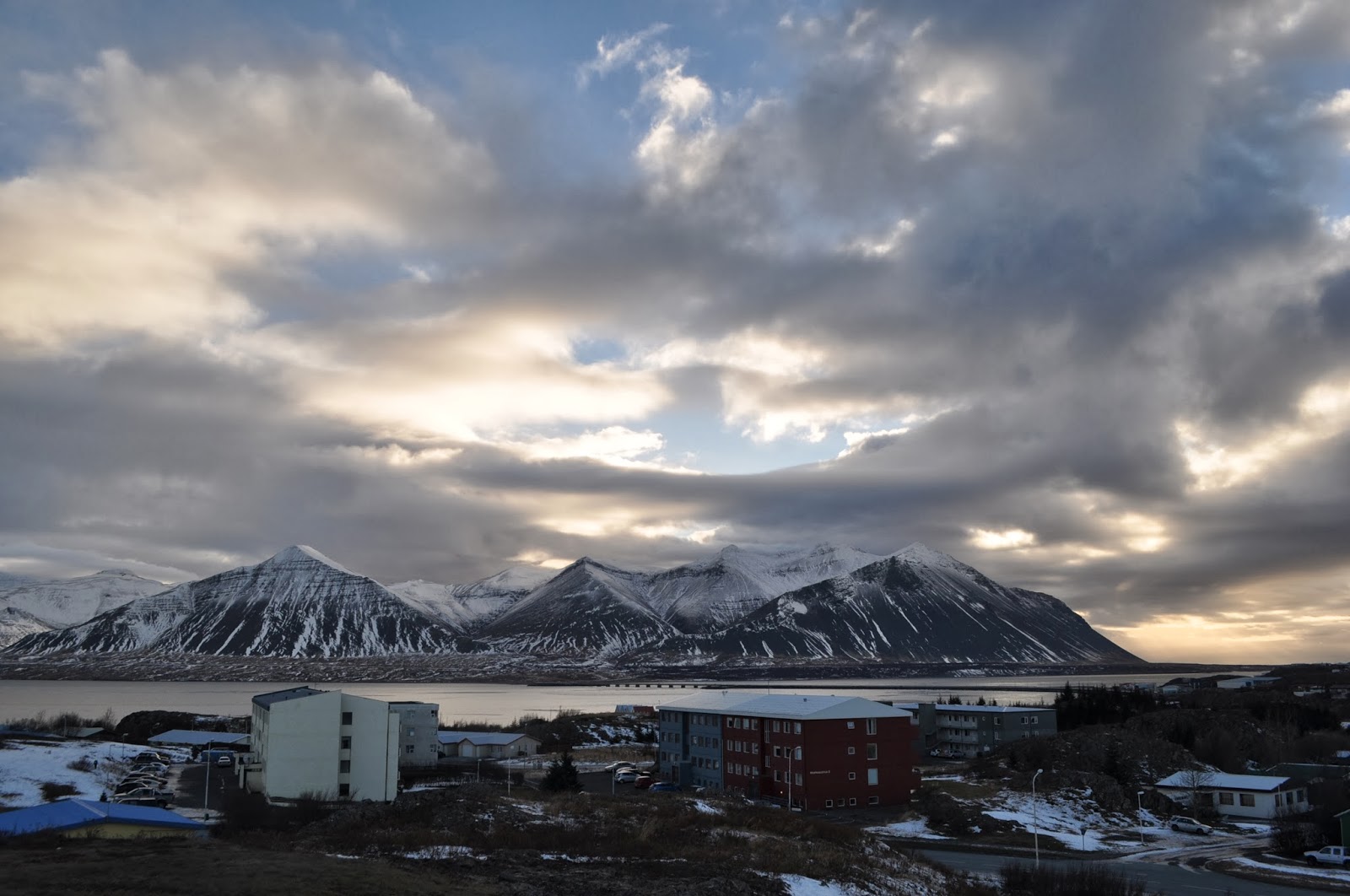
Volcanic Iceland

My life long quest to climb to the crater of volcano has been fulfilled. It only took 26 years and a hop and skip over to the lovely island of Iceland, and it was definitely worth the wait. The name Grabrok will be imprinted in my memory as the name of the volcano that forever changed my life. Joke, I will probably have forgotten that name by the time I go to sleep tonight, but that's only because I have a terrible memory.

Iceland was really great fun. I stayed with my friend Jade and a lovely Icelandic family with an adorable 5 year old son name Greta.. You can hear him proudly singing about the different colours of the rainbow in Icelandic on the Language Landscape website. In addition, below is a different kind of map, inspired by the use of Greta's crayola crayons. It shows the various exploratory routes taken during our stay, starting from the midnight journey from Keflavik to Borgarnes.


If you know anything about Iceland, you can see that I have not included any of the main tourist attractions which are located in the southern part of Iceland, otherwise known as the "Golden Triangle". That is because I did not go to this part, *GASP* rather spent most of my time hanging about Borgarnes, indulging in wonderful hospitality, rich culture and cosy (huggulegt) atmosphere. I throroughly recommend visiting Borgarnes and spending a couple days getting to know the area and the lovely people. Think farmer's markets, meeting the lovely mothers and grannies who make those wonderful Icelandic sweaters, and spectacular mountain views. I have to admit that after spending a week basking in the views of Borgarnes, I was slightly let down by Reykjavik. Although it is a quirky, vibrant city overflowing with creativity and light-hearted banter, it offers very little compared to the energy and magnetism you acquire from spending time in the mountains. Then again, I do love my landscapes.

Other than the trip to Grabrok, we also explored the Snaefells Penninsula which has its own mini glacier, hot springs as well as volcanic fields and beaches. Part of the magic of exploring the landscapes of Iceland are the stories which accompany each rock formation (the troll who had a tantrum and threw a bunch of rocks into the fjord) haunted farm-house (Iceland's last serial killer lived in Budir in the 1800s), and fjord (the man who was turned into a whale by a fairy as a form of punishment for being greedy and not helping his fellow countrymen in times of need).  I only wish I had had my audio recorder on me at all times to document all the stories I heard.


Monday, October 21, 2013

Portugal - Caves and Dinosaurs

Seriously beautiful caves, dinosaurs footprings, markets full of goat cheese, fresh olives, figs, absolutely massive food portions, port, 65 centavos for an espresso, 1 euro for a beer - who wouldn't want to live in Portugal?

Part of the fun of visiting new countries for me is the excitement and delight of tasting everything. Nothing beats going to a bakery, or a pasteleria in this case, first thing in the morning before people head off to work to join the line of old men standing hunched over the wooden counter enjoying their bica (espresso). The owner of the establishment doesn't even blink at the sight of two foreign girls timidly tinkling their way into the shop. He simply makes us two bicas and places them on the counter, gesturing they are for our consumption. Some pasteis de nata and orange pastries later, we head back to the science center for serious linguistic conversations.

Centro Ciencia Viva do Alviela is a science center situated on the Praia Fluvial dos Olhos d'Agua do Alviela (The fluid beach of the eyes of the Alviela waters - is the literal translation, but basically it sits next to a river which goes through a large natural park). The park itself is great for going on day treks, and the science center offers visitors a place to stay for very affordable prices, as well as light refreshements, and a themed ride for all members of the population who are over 1.2m tall. You get to ride an asteroid.

While staying at the science centre is very affordable, it can be difficult to access by anything other than car, and while it does offer some services, the one shops opening times are from 10:00-19:00. So it's best to come prepared. The nearby town Alcanena has plenty of shopping opportunities, bakeries, restaurants and wool shops to keep your heart content. The centre of the town is made up of an old church, a market which is open on weekends, and various hair dressers. 

All around this area are various caves, or grutas, such as Mira de Aire which are also worthwhile seeing, especially when you get to have a full five course dinner in one of these. I have a sneaky suspicion such dinners may only be for special occasions though. Even if you're not having a spectacular meal however, you will have spectacular views of underground rivers and fountains, and caves that are tactfully lit with warm light, and might even find some unique fossils and dinosaur teeth. 

Lastly, and by far my favorite experience were the dinosaur footprints. Driving another half hour north from Alcanena and Minde, towards a town called Fatima, you will get lost and end up going on a free urban tourist tour of rural Portugal. I'm not kidding, there are actually signs which sign post this route as the "urban tourist tour". It is a sweet little tour which takes you through old villages. You see plently of ancient olive trees, tiny houses and churches made of white stone squares which look like they could crumble into a pile at any moment, as well as sheep and cows. Eventually though, you will arrive at a derelict looking park with old iron structures representing sauropods, pay the three euro entrance fee and embark on the most exciting 40 minutes of your life. If you're into dinosaurs that is. Even if you are not that impressed by dinosaurs, you will be impressed by the view of the Portuguese country side from atop a high marble cliff, not to mention the fact that you actually get to step in dinosaur footprints. Your foot will be inside a giant dinosaur footprint. I'm excited just remembering the experience. I'm so excited I'm finding it very difficult to NOT write in caps. Definitely one of my top 100 experiences.

VISIT PORTUGAL!

Tuesday, August 20, 2013

Beaumaris Castle, Chester and Trwyn Du Lighthouse

The adventure in Wales continues as a slightly painful, disastrous experience, somehow juxtaposed against beautiful scenery and mystical castles. I am beginning to understand how the stereotype of a rugged grumpy Welshman has come to be. So if you ever find yourself in northern Wales, I suggest you take the opportunity to breath in plenty of fresh air, take long miserable walks, and surrender yourself to the peace and tranquility that surrounds you.

Of course, peace and tranquility are great and everything, but there's only so much poignant riverside meditation and sheep watching you can do, so I suggest you take a wander around these places as well:

Beaumaris Castle - I'm not a huge fan of castles. They're a bit like churches or temples if you ask me, but Beaumaris Castle is definitely worth a visit. It is one of the most complete castles in Wales, and I am told it is a beautiful sample of Edwardian architecture. Even if you're not that into architecture, it is a really great interactive experience, its numerous walls and tunnels offering plenty of opportunities to explore and let your imagination run wild. Once you make it out of the dark slightly creepy tunnels within the castle walls, you can meander on top of these same walls and enjoy the refreshing green-ness of surrounding fields. You can easily spend an hour if not more at this site. It is also child friendly and has mini playground with a bouncy castle next door.

Chester - Although not technically a Welsh city, at least a fourth of it is in Wales so it counts. It is home to the Chester racecourse, known as Roodee, the oldest racecourse still in use in England. Races take place throughout the year, with special racing festivals in August and May. These offer a great chance to don your best heels and grandest hats, and make like Eliza Doolitle and holler "move yer bloomin' arse!" at passing strangers (or horses). Aternatively, you can wander around and admire the wonderfully preserved and restored medieval architecture, and walk a top the city walls.

Trwyn Du Lighthouse - A visit to the lighthouse on a beautiful day is like stepping into a picture postcard. Your frustrations instantly melt away as soon as you step onto those white pebbles and feel the heat of the overhead sun. It is a great place for lounging, reading, drawing, flying kites or crab fishing.  Across the water you will also see Puffin Island, the ninth largest island off the coast of Wales and more excitingly, a Special Protection Area for coastal wild life such as Puffins and Great Cormorants. If you look hard enough you might even catch site of one (or both) of the seals that live in the bay.


Friday, August 16, 2013

Bangor and the Eisteddfod, Wales

I have shingles. Sigh. It is the most painful horrible thing ever and it is definitely making me hate Wales a tiny bit. And traveling. It is also making me question my fascination with traveling. One of these days I will post about the dangers of traveling, as well as my top ten countries worth visiting.

First, a bit on the magical Eisteddfod of Wales.

Pronounced es-TETH-vod, the Eisteddfod is a festival which takes place in Wales every year around the first week of August. It is a national festival, a time when all Welsh clans gather, travelling from all parts of the country, and even all parts of the world such as Welsh Patagonia, to celebrate and declare the strength and vitality of the Welsh language and culture. Within the grounds of the Eisteddfod, you are in a different world, a magical world of druids and bards, dragons and soothsayers. At least that is what I'm assuming it was like back in the 12th century when the festival tradition began. The druid tradition is still followed to the extent that ceremonial gatherings such as the awarding of the chair for poetry (an actual chair at that), is overseen by an Archdruid and her council of 150+ other druids, all dressed the part and all scholars of the Welsh language, music, or literature. Poetic bards are called upon to entertain the crowds with lyrical mastery between speeches at ceremonies. Dragon cheese and ale are popular (so good), and although there was no sign of any soothsayers, there was a mysterious procession of people shrouded in white with skeletal horse masks on.

While many traditions are of pagan origin, the stone circle left behind on site each year, many new ones have been incorporated over the years, such as the flamboyant giant of a pink tent at the centre of the grounds. It draws attention from all directions, screaming to be seen yet peacefully sitting amongst rolling green fields and white fluffy sheep. The festival is a very large event, one which requires a year's planning and fund-raising to organize. It is something for young and old, and refreshingly, it is something which all generations truly seem to enjoy taking part in. Young boys and girls eagerly practice their steps for the traditional clog dancing competitions, modern theater and art performances are available for viewing. Older people interact with non-Welsh tourists in Welsh taster classes, and even academic and political discussions are organized to debate the future of the Welsh language and culture. There is something very special about the way visitors of the Eisteddfod interact, the joy and laughter which permeats the air, and the general sense of acceptance of the self, the specially designated areas for children to run and scream and destroy things. A truly ingenious use of haystacks.

As an outsider it is really refreshing to see a culture within a larger nation which strives to maintain its identity, and enjoys doing so. My observations may be slightly skewed of course, but that is certainly what it feels like within the rose tinted tent.

 More information about next year's Eisteddfod can be found here.


Tuesday, August 6, 2013

Nazi bunkers, fishing and oil rigs

So I'm back in Europe, but this does not mean I have stopped travelling. In fact, I'm travelling more than ever, nearly to the point of delusional exhaustion which results in me walking into doors. Safe to say I'm happy that I will be in ONE place for a whole three weeks. Amazing.

This one
At the end of June I went to Norway to visit that one there > and had a great time. It was beautiful. I discovered that fjords in Norway are everywhere (it is one of those things you have to see to believe) and the people are lovely, albeit slightly sceptical of my very obvious foreign-ness. They are also very tall. I have never felt smaller than when surrounded by tall blonde Norwegians in blue blazers in a cramped bar in Stavanger. It's not like you exactly care though when you're in the company of good friends and you're all acting a bit loopy on the dance floor.

Stavanger is the cutest little seaside town/city. It is technically a city, because it has a cathedral, but it really feels more like a town. Especially when you see a giant cruise ship docked in the harbor towering over the wee wooden pubs and houses. Old Stavanger lies on the left of the harbour if you're facing inland, and is comprised of tiny white wooden houses, tiny flower gardens and cobbled streets which lead you up the hill to the tinned mackerel museum. Very cool and interesting if you're into old labels and adverts, but it was enough just to see the free exhibit at the front. To the right of the harbour are pubs, restaurants and more meandering cobbled streets which lead you to more pubs and restaurants.  

I would like to say that many Norwegian stereotypes apply. People are tall, blonde and outdoorsy. They dress very smart in navy blue blazers, or practical down jackets and wind breakers. A trip to the coast includes a fishing trip on a boat. Rocks and boulders resemble trolls and wooded areas look like they were taken straight out of an illustrated fairy tale book about the animals of the forest. Unexpected factors of this trip included the sheer number of pale peach jelly fish in the sea, the exploration of spooky nazi bunkers on the cliffs of Hausvik, and the horrible monster of a hangover that I had after drinking one too many øls. Locals beers are delicious. I particularly recommend the White Dog Lervig øl from Stavanger.


Finally, the landscape. I think this is where I finally understood the utter fascination some artists have with landscapes. Don't get me wrong. I have always enjoyed a good view, but never really understood why. Then standing on the side of a cliff peering out into the ocean, I realized that nothing compares to that feeling you get when you are confronted by the sheer size of the world in comparison to your tiny self. There is nothing that compares to standing on top of a rock or a mountain surrounded by nothing but scenery, giant jagged rocks plunging into a sapphire coloured ocean, bright blue sky above you, wind whipping at your hair and waves crashing against the rocks below you. And then the technological addiction kicks in and I understood the frustration so many landscape artists must have felt as the tried, and still try, to reproduce an image of their surroundings. Try as I may, no picture will ever capture that feeling. But a drawing might.


Sunday, August 4, 2013

Summer travels

This year so far, has been all about travelling. I regret not having kept this blog going for the past couple months, because even though I am not discovering new joys of residing in the Philippines anymore, it does not mean I have stopped discovering the joys of adventure travels! This month, from tomorrow onwards, I will be residing in Bangor, Wales - working and learning new geeky linguisticky things, but also hopefully exploring the coast, going to ancient druid festivals, and getting my surf on. At least learning to. My aim for the next three weeks then, is to post at least one blog per country missed in the past two months (Vietnam, UK, Norway and Germany), plus the Welsh adventures. Ambitious I know, but at least I'll get some done.

Currently I am in Germany, enjoying some home time and eating hearty and delicious german bread, butter, potatoes and beer with a bit of extreme gardening on the side. I know I'm biased, but sometimes there isn't anything better than that. I leave you with pictures of the lovely German countryside which is one of my homes:


Thursday, May 30, 2013

Ghosts and children of the coal mines

Today was full of adventure. Creepy and exciting adventure which I'm going manipulate to sound even more exciting than it actually was, because that's just how I roll. I kid. I would never do that.

So. Adventure...

The day started in a panic with my mother yelling at me hurry up and get showered because we were leaving in 15. Ten minutes later, showered, packed and ready to go, I find out this was a lie. We had a whole half hour to spare. So I mosied down to the mouse infested "cafeteria" and ordered myself something for the most important meal of the day, only to be served rubbery egg on crustless white bread. Delicious. Two hours later we arrived at our seaside destination of Bislig, on the eastern shoreline of Mindanao island. As always, that first glimpse of the ocean is immensely exciting for me. Being at true sea level and seeing that massive body of water, waves gently lapping at the sand in friendly greeting, but with a body so vast and overwhelming at the same time.

Bislig has the feel of your typical sea-side town: dry, hot and salty. Life has a slow-paced, lazy aura about it. The sun is hot and blistering, but a warm breeze from the ocean keeps the palm trees in constant motion. This aside, the city is mostly built on marshland, so houses are built on bamboo or wooden stilts, and long thin kayak like boats are used to navigate the marshy waters. Houses are made of wood, and freely decorated with potted plants, trees and vines, as well as an assortment of useful fishing gear and fishing produce. A long heavy bridge has been built over these houses and the marsh to connect non-marshland with the concrete political and transportation center of the town. This is as far as I got. Again, two hours later after suitable transportation (although this was also a lie as was found out later - transportation was not suitable) was negotiated, we made way for Sikahuy, a village center of one of the combated tribal lands of Surigao del Sur.

These tribal lands are a very rich source of natural resources which private companies have taken advantage of in the past. The trees that grow in this area, large, white, bare trees are an excellent source of paper, and their forests have been largely exploited in the past. Hence the view of greatly reduced, ghostly white forests of felled trees. The activities of the paper company are no longer, due to possible bankruptcy, or the appearance of a larger source of income, coal. I do not know. Today however, privately owned miniature coal shafts can be founded dotted all along the now barren lands. These are open to curious explorers accompanied by chatty and equally curious semi-land owners. I do not really recommend entering a coal shaft in the middle of the day, in a hot and humid environment. It is already quite a cramped and uncomfortable experience even for the smallest of people, but temperatures are much higher down there. This is not only uncomfortable for the self, the the extreme heat can loosens the soil which is not the safest for climbing, and can result in walls caving in. The locals like to attribute the sounds of trickling soil and falling rocks to the presence of ghosts of dead miners, but my companion quickly assured me that a true catholic does not believe in such things. Really?

After the sweltering dusty mines, we discovered a little stream, surprisingly clear and healthy. Four little boys were jumping around naked and happy in the natural pools, quite astonished at my white, barefooted presence, but openly friendly and unihibited. After demanding a quick picture, they went back to their games and wrestling and I made my way back to the village. More exploring lead to the discovery of a church, two schools and health centre, all which have been constructed with the help of coal money...

Wednesday, May 29, 2013

Indigenous Filipino words and concepts

It didn't take long for the linguist/anthropologist in me to start asking language and culture related questions and start annoying people. Tagalog is the main language spoken in the Philippines, but in Mindanao, the most widely spoken language is Visaya, otherwise known as Cebuano. Here is some of what I have uncovered so far from basic observations and patient answers from locals:

Balun - Cebuano. A well or other man-made source of water. It is a public space used to collect water for consumption, irrigation and bathing. They are commonly found along national roads.

Bolo - Cebuano. Like a machete, but slightly thinner with a curved tip. Excellent for cutting coconuts.

Brigada - English origin. Originates from word, brigade. It refers to a community driven group of people who come together to perform community service activities such as building, cleaning and painting public schools and buildings.

Cemeterio - Spanish origin. Public cemeteries are a remnant of the Spanish conquest. Previously, Cebuanos would hang their dead from trees, declaring the area sacred and impassable for a year. Other burial practices include hollowing out the trunk of a tree and using this as a casket to bury the dead underground. Traditionally, all burial grounds were considered sacred, but since Spanish rule, the concept of public cemeteries has become widely accepted. As a result, public cemeteries, cement blocks shaded by rattan structures, can be found dotted along national roads and highways.

Inahan - Cebuano. Mother.

Purok - Cebuano. A covered wooden structure with built in seating which serves as a community meeting point. It is a public space for members of the same community to meet and chat, particularly after lunch or late afternoon. You'll find these dotted along the national highway, and are very common. These wooden structures can provide an insight into the community's organisational structure and social relations. A well constructed and designed purok indicates the presence of a strong and unified community. Additional decorations such as tribal markings, gardens, or accompanying sources of water, may also be indicative of this.

Rattan - Cebuano. Thin vines from the forest used to make furniture, baskets, and traditional housing. Some also use the rattan vines as calendars. Rattan furniture is exported all over the world, but is becoming an increasingly scarce commodity for local indigenous tribes as preference is given by the government to logging companies and traders.

That is all for now. More to come!

Saturday, May 25, 2013

Agusan del Sur, Mindanao

Life got interesting all of sudden. The past week was spent exploring the second largest island of the Philippines, Mindanao. Arriving in Butuan, promptly heading on to Agusan del Sur and Esperanza, there was plenty of adventure to be had. I am once again in my element, exploring the nitty gritty details that different cultures have to offer.

Wah Wah River, Agusan del Sur, Mindanao
I have been on three hour long boat rides down the Wah Wah river which make you wish you had more padding down there. This boat ride opened doors to meeting indigenous leaders of the area, taking part in a traditional ceremony and offerings, all in the name of preserving biodiversity and reducing indigenous conflict in the area. Very interesting. Mindanao is very rich in natural resources which is a source of conflict given the various indigenous groups, politicians, as well as mining and logging companies who wish to monopolize and make use of these resources. It seems efforts are being made to return these rich lands to the local indigenous communities for preservation, but politics is always complicated. We'll see what happens.

Man harvesting coconuts
Work aside, mountain trails have offered spectacular views of deliciously refreshing rivers you wish you could plunge head first into. The local people are kind, surprisingly open to vegetarian diets, promptly offering a variety of different potatoes, bananas (saba), yams (camote), freshly cut coconut, and all different kinds of edible leaves. I'm loving hiking along the mountain trails and having all different kinds of edible leaves pointed out to me. The only downside is that in an effort to show you how amazing their home land is, the local people will not necessarily tell you about the poisonous plants or animals you may encounter. This is not very good when you're going to the bathroom in the bush and brush delicate areas against potentially rash inducing plants.

Next week we will travel on to Bislig, on the south-eastern coast of Mindanao.


Monday, May 20, 2013

Hong Kong duck and Macau

Miniature vesion of mega duck. Not the same.
So I don't know if any of you have heard of the giant rubber duck that one day decided to leave the tepid waters of its bathtub, spread its wings and travel the world, but this duck is my hero. Seriously. The artist as well of course. What an ingenious idea. And since I'm on this side of the world, I thought, "hey, why not pop over to Hong Kong for the weekend and see this amazing duck"? So I did. In fact, my whole family did. The four of us bought tickets and flew 1hr 20min from Manila to Hong Kong to see the giant rubber duck that graces Victoria Harbour's waters. And what happens? The same day we arrive, some giant asshole decides to take all of their impotent rage out on a poor innocent duck and stab him mercilessly until he is reduced to a sad deflated version of his former self.

Mega sad face.

Well, since the duck was down for "maintenance" we did other things instead like rediscover the family roots and meet up with relatives we didn't even know we had. Which was fun. I like meeting cool relatives who are just as adventurous and full of life. They enjoy laughing just as much as the next person. Tim Chiu is one such relative, my mother's cousin on my grandmother's side, who lives in Macau. Usually I wouldn't recommend visiting Macau for all its glamorous and shiny casinos, but I would recommend it if you went to visit Tim and his version of the city. Old Macau is beautiful and historic, full of interesting alleys, old, run-down sky scrapers, humid and wet.

Cousins and Inti with bamboo stick
I may not be painting the most appealing images, but the beauty of Macau, is that if you really take the time, you will discover the historic Portuguese influence on the development of the city. The street signs are made of white and blue tiles. Detailed iron work decorates the old apartment buildings that tower over the old quarter. In the middle of the city, you'll find a surprisingly large park, carefully hidden away into the side of the mountain. At the top of this mountain, you will come across a tiny church and lighthouse combo and 360 view of the city. The two buildings are very simple, with minimal decorations, but the amount of care and effort that has been put into preserving these two buildings is impressive. I wish more people cared about historic buildings.

Run down the forrested mountain, leaping over waist-high white walls that line the city's paths, and you'll find your way to St. Paul's ruin, another impressive colonial gate like structure in the old quarter. Worth the walk, especially if you still have enough energy to march up another hill past the historic museum to wander around the old fortress. Picture another old concrete, mossy structure, with overhanging trees and vines, and giant canons. Very peaceful compared to St. Paul's.

There are more adventures to write about, but I will leave it here for now. I have to pack for Phillipine adventures in Butuan, my next destination.

Chinese-Portuguese fusion